Heat on the south side, passers-by looking in on the ground floor, faded parquet and a faded sofa. Window film for houses and flats solves these problems using the windows you already have, in a single working day and with no building work.
A great many of Riga's flats are in standard-build blocks put up in the Soviet era. The layouts in those buildings were standardised; their orientation towards the sun was not. In south- and south-west-facing flats in Purvciems, Pļavnieki, Imanta and Ķengarags, summer afternoons heat the room to the point where it is simply unpleasant to be in. Ventilation does not improve matters, because the air coming through the open window is just as warm. That is precisely why solar control film is the most frequently ordered solution for flats.
In new developments the problem takes a different form. There you often find floor-to-ceiling glazing, which gives the flat light and a view but turns the living room into a greenhouse in summer. What is more, ordinary blinds cannot usually be fitted across the full height of such windows without ruining the whole feel of the room. Film works well here, because as a piece of hardware it is invisible - the only thing that changes is how much heat the glass lets in.
The third typical situation is the ground floor. If the windows are at the level of the pavement or below it, every passer-by can look into the flat. Curtains only solve that when they are drawn, and then the room is dark all day. Frosted film or mirror film lets the daylight in while shutting out the view from the street.
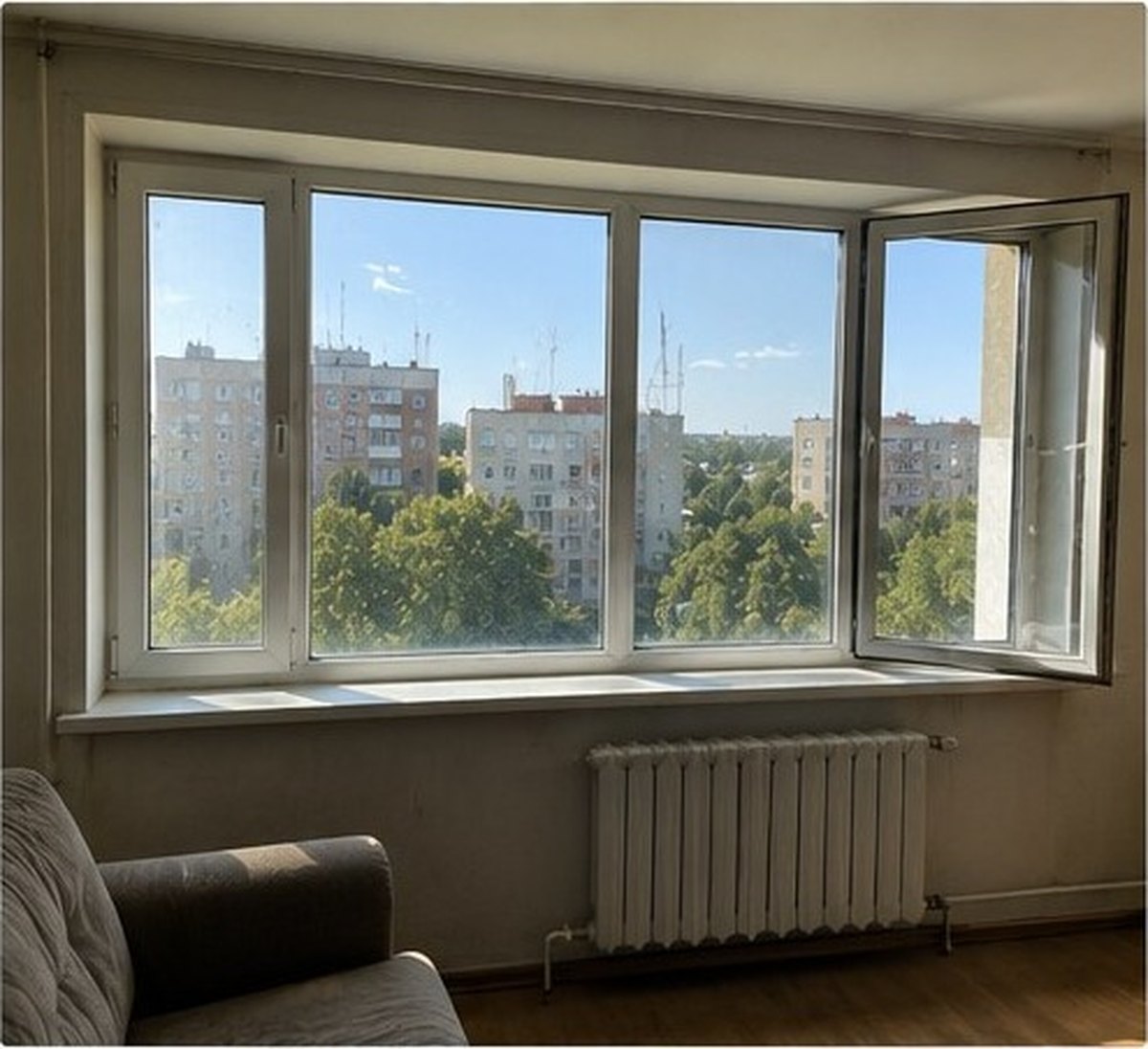
One home rarely needs the same film everywhere. In most cases the living room needs heat control, the bedroom needs light control, and the bathroom and ground-floor windows need privacy.
Here the main problem is almost always heat and glare in the afternoon. The aim is to reduce the heat while keeping the view through the window and a bright room, since that is exactly why this room was chosen. We usually use a light solar control film with higher light transmission. If the windows are also overlooked from the street, the same function can be combined with a slight mirror effect.
Two separate needs. On the east side in summer the sun rises at half past three and the room is light long before the alarm goes off. On the west side the problem is the evening heat, which lingers in the walls into the night. Film does not replace blackout curtains, but it substantially reduces both glare and heat build-up. For privacy a frosted band across the lower part of the window is often enough.
If a bathroom has a window at all, it almost always needs full privacy but not darkness. Frosted film is the standard choice here - it looks like etched glass, lets daylight through and completely obscures any silhouette. The film copes with moisture and steam provided it has been applied correctly and the glass was properly prepared beforehand.
In a kitchen the window is often directly above the sink or the worktop, and that means two things. First, there is steam and grease, so the glass has to be cleaned more thoroughly than elsewhere before the film goes on. Second, afternoon sun is at its most annoying at this window, because you cannot turn away from it while working at the counter. A light solar film or UV protection film works best here.
In a child's room, parents usually mention three things: daytime naps in a room that is too bright, summer heat and the safety of the glass. Solar film handles the first two. The third calls for safety film, which holds the fragments together if the glass is broken. That matters particularly for low-set windows and glazed balcony doors.
Roof windows in a loft conversion are the most problematic spot in the whole house, because the sun strikes them almost perpendicularly. In summer it is regularly ten degrees hotter beneath them than in the rest of the house. Glazed terraces and verandas behave the same way. These need a markedly reflective film rather than a light tint, and we discuss that separately during the measuring visit.
Unlike a building site, a flat or house has people living in it, and that changes how the work is organised. We arrive with our own equipment, leave our shoes at the door or put on overshoes, and before we start we cover the floor and the sill. The installation uses water with a soap solution, so a little moisture around the window is unavoidable, but it is controlled and everything is wiped down afterwards.
There is no need to move the furniture out entirely. What we need is clear access to the window, roughly a metre's width, so that we can work across the whole pane. In practice that means the sofa gets pulled forward a little while the bookcase or wardrobe stays where it is. Window sills should be cleared of plant pots, picture frames and odds and ends - we usually do that together with the owner, so nothing fragile goes missing from its place.
There is no dust and no building debris. The film is cut on site, the offcuts are bagged up and taken away. The room can be used as soon as we finish. The only stipulation is that for a couple of days the glass should not be washed and the film should not be pressed - the adhesive layer needs to dry out fully. During this period slight hazy patches may be visible against the light, and they then disappear of their own accord.
A typical flat with three to six windows is completed in one day. For a private house with extensive glazing, a terrace and roof windows, we allow more time and agree it in advance, so you are not left waiting and wondering.
Describe which room has the problem and which way the windows face. We will prepare a quote with the price per square metre and get in touch by phone.
Heat is noticed straight away, but fading happens slowly and so is spotted too late. It shows up most clearly when a rug or a sofa gets moved - underneath, the parquet is one shade, and right beside it quite another. The same happens to textiles: the colour of curtains on the sunny side shifts over the years, leather furniture becomes drier and lighter, timber surfaces yellow.
Ultraviolet radiation passes through ordinary window glass almost unimpeded. That is why, in homes with expensive parquet, solid timber furniture or paintings on the wall on the sunny side, film is worth fitting even when heat is not a problem. UV film is very nearly clear - once it is on, nothing in the room looks any different; the only change is in what the glass lets through.
If a home has both a heat problem and a fading problem, they do not have to be tackled separately. Solar control films also reduce ultraviolet radiation, so a single solution usually covers both needs. Which option to choose depends on how much daylight you want to keep in the room.
Saying honestly when film will not help matters as much as selling it. Film will not create complete darkness - if the aim is to get to sleep on a light summer evening, you need blackout curtains or roller blinds, and film complements them rather than replacing them.
Nor will film warm a room in winter. It reduces heat coming in during summer, but it is not an insulation material. If a flat is cold in winter, the cause is usually the window seals or the walls, not the glass.
If the glass is already cracked, or moisture has got in between the panes of a glazing unit, film will not repair it and we will not apply film to such glass. In these cases we say so on the spot during the measuring visit, rather than after the work is done. If your home is outside Riga, take a look at our service area - we also work in Jūrmala, Mārupe, Ķekava, Salaspils and Ogre.
Yes, a single window is a perfectly normal order and a common one - one bedroom that is too bright in the morning, for instance. The only thing to bear in mind is the minimum order of €75, which means that one small window will cost the same as roughly three square metres. That is why many people choose to do all the windows on one side of the property at the same time.
There is no need to clear the room completely. What we need is free access to the window, roughly a metre's width - usually it is enough to shift a sofa or a small cabinet slightly to one side. Window sills should be cleared of plant pots and small items. We cover the floor and the surfaces of nearby furniture ourselves, because the installation involves water with a soap solution.
Yes. The windows of Riga's standard-build apartment blocks - both the old timber-framed units and the PVC glazing installed later - are all suitable for film. What matters is the condition of the glass, not the material of the frame. If the glass is cracked, or moisture has got in between the panes of a glazing unit, we discuss that during the measuring visit before any work begins.
A bedroom usually has two separate needs - morning light and evening privacy. If early summer sun on the east side is the problem, solar control film helps by cutting the brightness and the heat without blocking the view. If privacy matters most, the usual choice is frosted film on the lower part or opaque privacy film across the whole pane. Film does not create complete darkness - that calls for curtains or roller blinds.
No, and that is the most important thing to know about it. Mirror film and one-way vision film work in the direction from the brighter side towards the darker one. During the day it is brighter outside, so all that can be seen from the street is a reflection. In the evening, when the lights are on indoors, the ratio reverses and the room becomes visible from outside. If you need privacy in the evening as well, frosted or opaque privacy film is the better fit.
For a typical flat with three to six windows the work usually takes anywhere from a few hours to a single working day. A private house with large glazed areas, a glazed terrace or roof windows may need a second day. The room can be used as soon as the work is finished; the only thing to avoid is washing the glass for a few days.
Describe your situation - which way the windows face, which room, what the problem is. We will recommend a solution, get in touch and give you a quote.
We have received your enquiry and will prepare a quote. We will call you on the phone number you provided.
