Heat rejection film is for rooms you simply cannot be in during the summer - loft conversions, attic rooms, glazed terraces and offices with large expanses of glass. We install window film for heat across Riga and within a 50 km radius. From €25/m², film and labour together.
This page is about one specific problem: temperature. If your main complaint is brightness or faded furniture, solar control film will suit you better.
Some rooms are simply impossible to work or sleep in on a summer afternoon. The thermometer reads higher than it does outdoors, the air stands still, and even an open window changes nothing because the outside air is just as warm. It happens most often where a large glazed area meets a small volume of air, or where the roof overhead lacks adequate insulation.
The heat builds up gradually. In the morning everything is fine, by midday it becomes uncomfortable, and by evening the room has stored so much warmth that it does not cool down overnight. The next morning the process starts from a higher point.
A substantial share of that heat arrives through the glass. A window holds back almost none of the sun's energy, and a sloping roof window takes it nearly head-on in summer - that is, at maximum intensity. Heat rejection film intervenes at precisely that point.
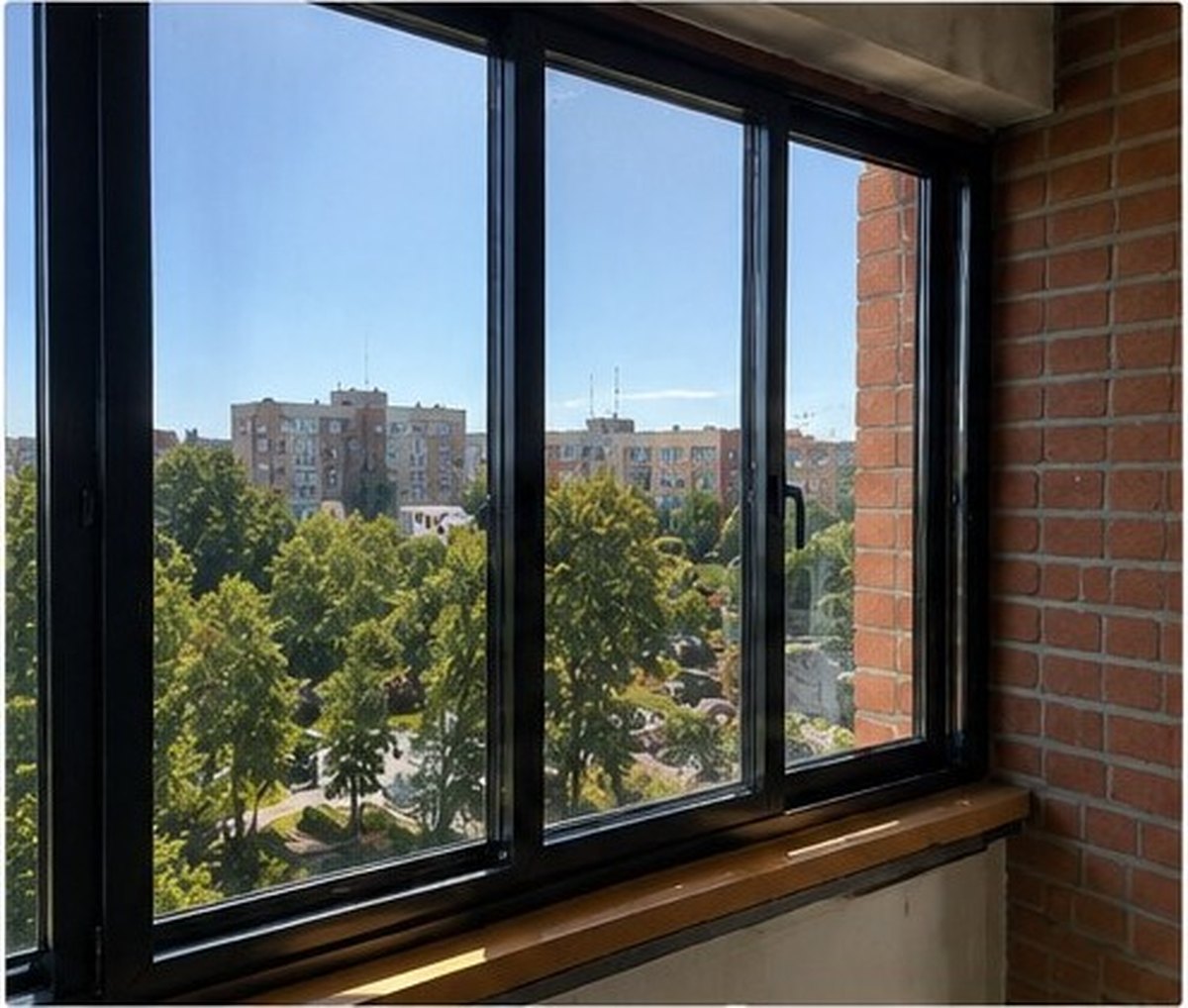
The classic case. Sloping roof windows and the roof structure together create a space that heats up faster than the rest of the house.
Top-floor flats beneath a flat roof take heat from two directions. Film removes the share arriving through the windows.
In open-plan offices the staff sitting nearest the façade suffer most. Heat rejection film evens the temperature out across the floor.
Glass on every side means the space heats up within a couple of hours. This is usually where the effect is greatest.
In summer they turn into greenhouses, and the heat then flows on through the doors into the rest of the flat.
West-facing studies and bedrooms that are simply unusable after three o'clock.
The first thought in a hot room is usually to fit air conditioning. It works, but it fights the symptom rather than the cause. As long as heat keeps pouring in through the glass, the unit has to cool continuously - and it is precisely that continuous running at full output that drives the biggest electricity bills.
There is another side to it. A room with no solar protection needs a more powerful unit, which means a higher price at the point of purchase. If the load from the windows has been cut beforehand, a smaller and quieter unit is often enough.
A third consideration applies to rooms where air conditioning cannot be installed at all. In older buildings in central Riga, siting the external unit is not always permitted, and in rented offices the building manager frequently forbids it. In cases like these, heat rejection film is one of the few solutions available.
Film needs no electricity, no servicing and no wall space. It goes on once and works every sunny day at no further cost. Prices for every type of film are gathered on the prices page.
Describe the room that overheats and the approximate glazed area. We will call you, recommend a suitable film and give you a price.
Not all windows are equal. The greatest gain comes on ordinary clear glass with no solar control coating. That is what you find in older timber windows, glazed balconies, terraces and many roof windows fitted some years ago.
If the window already has a low-emissivity glazing unit, it holds back some of the heat by itself, and the additional effect of the film will be more modest. That does not mean film is not worth it - only that expectations need adjusting. We assess the glass type during the measuring visit and tell you frankly which windows will repay the investment and which will not.
Area matters too: one small window changes little, while three roof windows in a loft change a great deal.
Heat rejection film reduces heat; it does not eliminate it. That is the single most important thing to understand before ordering. If your loft room has been reaching thirty degrees on hot days, it will still be warm once the film is on - just noticeably more moderate, and slower to get there.
Film has no effect on heat coming through the roof, the walls or from outside air through an open window. If the roof is uninsulated, the film solves one of the two causes. The best results come when film is combined with evening ventilation and roof insulation.
There is a further advantage: the room keeps its daylight and its view, unlike a room with the blinds shut. If you need privacy as well, look at mirror film; where the view out does not matter, frosted film or blackout film will do the job.
Just tell us which room overheats, how many windows it has and which way they face. Exact measurements are not needed.
We call you, recommend a suitable film and give you a price per square metre together with an approximate total.
We measure the glazing and check the glass type and the access. After that the price is final.
We clean the glass, cut the film to size and apply it. The room can be used as soon as we finish.
We work in every district of Riga and across Greater Riga, including Jūrmala, Mārupe, Ķekava and Ogre. The full list is on the service area page, and you can read about our work in the capital on the Riga page. If the windows already carry old, cracked film, we remove it from €8/m² before applying the new one.
Nobody can honestly quote an exact number of degrees, because the result depends on the glazed area, the volume of the room, the roof insulation and the ventilation. In practice the film substantially reduces the heat coming in through the windows, so the room warms up more slowly and the daily peak is lower. The difference is greatest in rooms where the glazed area is large relative to the size of the space.
No. Film does not cool the air; it only reduces the amount of heat entering the room through the glass. If there is already air conditioning in the room, it will generally need to run less often and at less than full output once the film is on. In rooms where the overheating is moderate the film alone may be enough, but in a loft under an uninsulated roof it is part of the solution rather than the whole of it.
In practice they are closely related products, and the difference lies in the emphasis. You choose solar control film when the problem is the overall effect of the sun - heat, brightness, glare and fading. You choose heat rejection film when temperature is the only problem, in which case the priority is the maximum reduction in heat, even if the room becomes slightly darker.
Yes, and roof windows are often the most important place of all, because in summer they take the sun almost head-on. Before starting we check the type of glass and the frame construction, since some roof windows use toughened or low-emissivity glass, for which the film has to be chosen carefully. We assess this during the free measuring visit.
The greatest gain is on ordinary clear glass with no solar control coating of its own - exactly what you find in older windows, glazed balconies and terraces. If the window already has a low-emissivity glazing unit, the additional effect will be more modest. We assess the glass type on site and tell you whether filming those particular windows is worth the investment.
Prices start from €25/m², and that covers both the film and the labour. Prices are excl. VAT and the minimum order is €75. Roof windows and hard-to-reach glazing take more time, so we set the final figure after measuring on site.
Describe your situation in the form - we will call, recommend a film and give you a quote.
We have received your enquiry and will prepare a quote. We will call you on the phone number you provided.
