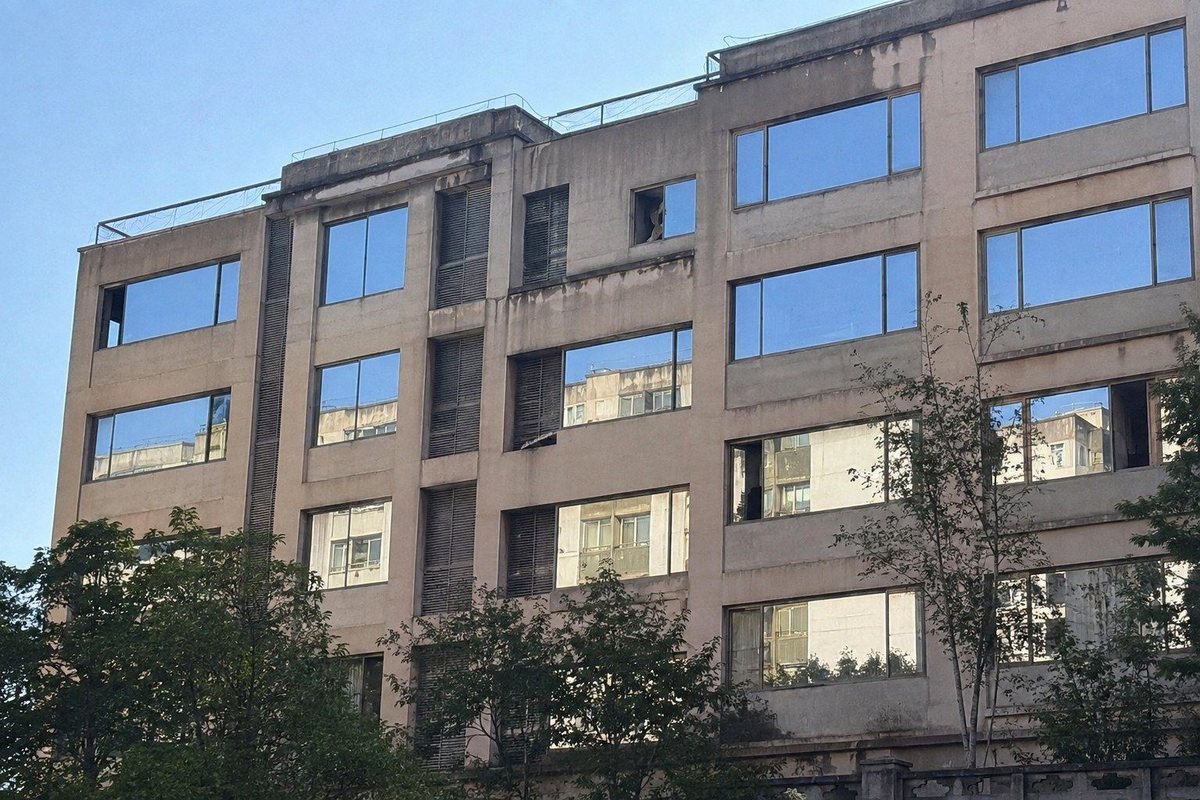
In daylight, reflective film turns a window into a mirror when seen from outside, while reflecting away part of the solar heat. We install mirror film on house windows, apartments and offices across Riga and within a 50 km radius. From €25/m², film and labour together.
Mirror film carries an extremely thin metallic layer that reflects part of the light. That layer is what produces both the reflective appearance and the reduction in heat.
The essential principle is this: the film itself is not one-way. It always reflects equally in both directions. Which side sees the mirror is determined by the lighting. If one side has far more light than the other, the light reflected on the brighter side overwhelms whatever comes through the glass, and the eye sees a mirror. From the darker side you can look through the glass almost normally.
During the day it is almost always brighter outdoors than indoors, even in overcast weather. That is exactly why, in daylight, all you see from the street is a mirror, while from inside the room you can look out unimpeded. The view through the window is retained.
The same principle gives rise to the film's main limitation, which is covered in the next section. It is well worth reading before you decide.
This is the most common misunderstanding about mirror film, and we always explain it before starting work.
Once it grows dark outside and the lights go on indoors, the brighter side is no longer the street but the room. The ratio reverses. As a result the room becomes visible from the street, and anyone walking past can see what is going on inside. At the same time, from indoors the window starts to behave like a mirror and the view out disappears.
This is not a fault in the film and has nothing to do with its quality or price. It is physics, and it applies to every reflective film without exception. No mirror film provides privacy after dark while the lights are on indoors.
The practical solution. If you need privacy in the evenings too, mirror film is combined with curtains, blinds or roller shades that are closed at night. The film then gives you daytime privacy without curtains, and the curtains are used only after dark. If privacy has to work around the clock with nothing else added, the right choice is frosted film or blackout film, neither of which depends on the lighting.
By day the room cannot be seen into from the street, yet from inside the view out remains. There is no longer any need to keep the curtains drawn during the day.
The metallic layer reflects part of the heat as well, so reflective films work well against overheating on the south and west sides.
You can sit by the window without the sun in your eyes, and there is no longer a reflection across your monitor.
The film substantially reduces the ultraviolet light that bleaches parquet, fabrics and goods displayed in shops.
In offices and apartment blocks, evenly tinted windows look considerably tidier than a different set of curtains in every window.
The film goes onto the existing glass. There is no building work, and a typical flat is finished within a day.
Tell us which windows need doing and what the main aim is - privacy, heat or both. We will call you and talk through the quote.
Ground-floor flats facing the street are the most common case in Riga. By day passers-by look straight into the room, and until now the only answer was to keep the curtains drawn all day. Mirror film gives back the daylight and the view, leaving the curtains for the evening.
In offices it is used where desks sit against a glass façade, or where another building stands opposite and the windows look straight into one another. For meeting rooms used for confidential discussions in the evenings as well, frosted film is the safer choice.
In houses, reflective film often goes on south-facing living room windows and glazed terraces, where heat and the neighbours' line of sight are both a nuisance. Shops and salons use it on the parts of the shopfront where stock needs protecting from the sun.
We work in every district of Riga and across Greater Riga - see our service area and our work in Riga. Prices for every film are gathered on the prices page.
Reflective films are made mainly in two tones. Silver is neutral and technical in appearance. It gives the most pronounced mirror effect and suits offices, commercial premises and modern buildings with large expanses of glass.
Bronze is warmer and less conspicuous. From outside it reads as dark, faintly golden glass rather than as a mirror. In houses and older buildings, where a markedly silver window would look out of place, bronze usually sits better.
Both tones are available in strongly mirrored and in lighter versions. The stronger the effect, the more daylight is lost indoors, so the choice has to match the orientation of the room.
We usually bring samples to the measuring visit and hold them against the glass. Seeing a particular tone in your own window is far more useful than choosing from a description. In an apartment block it is also worth checking beforehand whether the building's rules restrict changes to the appearance of the façade.
No, and this is the single most important thing to know before ordering. The mirror effect depends on the difference in light levels between the two sides of the glass. During the day it is brighter outside than indoors, so from the street you see a mirror. In the evening, when the lights are on indoors and it is dark outside, the ratio reverses and the room becomes visible from outside. For night-time privacy you also need curtains, blinds or roller shades.
The film carries an extremely thin metallic layer that reflects part of the light. From whichever side has more light, the reflected light overwhelms whatever comes through the glass and the eye sees a mirror. From the darker side you can look through the glass almost normally. The effect therefore always depends on the lighting, not on which way round the film is fitted.
Yes. The same metallic layer that creates the mirror effect also reflects part of the solar heat, so reflective films generally perform well against overheating. If temperature is your main problem and you do not need privacy, consider solar control film or heat rejection film.
During the day the window looks like an even reflective surface mirroring the sky and the surroundings. The silver tone is neutral and technical; the bronze tone is warmer and less conspicuous. In apartment blocks it is worth bearing in mind that the façade looks more uniform if the film goes on all the windows of one section rather than just one.
Reflective films generally reduce daylight more than light solar control films do, because reflecting light is precisely what creates the effect. There are strongly mirrored versions and lighter ones. If the room is already dark or north-facing, we recommend a lighter film and suggest looking at a sample against your own window before deciding.
Prices start from €25/m², and that covers both the film and the labour. Prices are excl. VAT and the minimum order is €75. The final figure depends on the size and number of panes and on access, so we give an exact quote after free on-site measuring.
Describe your situation in the form - we will recommend the right film, get in touch and give you a quote.
We have received your enquiry and will prepare a quote. We will call you on the phone number you provided.
