One-way vision film lets you see out while restricting the view in - as long as it is brighter outside than indoors. We install it in offices, salons, meeting rooms and shopfronts across Riga and within a 50 km radius. From €25/m², film and labour together.
This is one of the few products where the conversation is best begun with what it does not do.
Physically, one-way vision film is a very thin film with a reflective metallic layer. It lets part of the light through and reflects part of it back. The human eye always registers the stronger signal, so the result depends on which side of the glass has more light.
When it is daylight outside and ordinary office lighting is on indoors, there is many times more light outside. Someone standing in the street sees mainly the reflected scene - the sky, the building opposite, themselves. The faint image from inside the room is simply lost in it. For the person indoors the reverse is true: they are looking from the darker side towards the brighter one, so the view out to the street is retained.
That is why it would be more accurate to speak not of “one-way glass” but of “glass that favours the view from the darker side”. There is no magic involved, and that is worth knowing before you order.
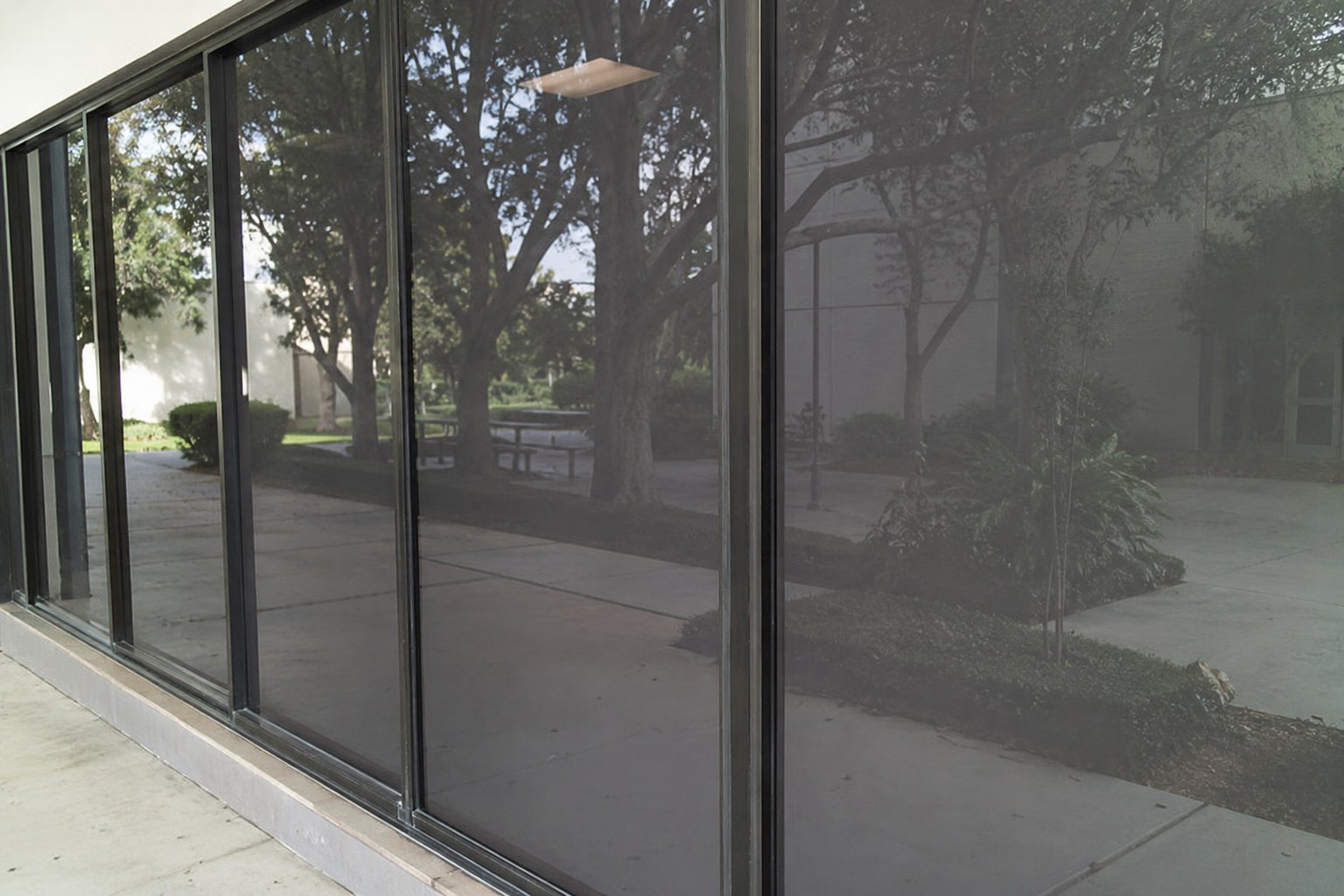
After sunset the situation swaps round. It is dark outside, the lights are on indoors, and now the brighter side is the inside. Someone in the street sees the room as clearly as they saw the reflection during the day. The person indoors, by contrast, sees themselves in the window.
No manufacturer can get round this, because it is a question of optics rather than materials. If someone claims their film works one way round the clock, they are either confused or talking about frosted film.
In practical terms this makes one-way vision film a daytime solution. For an office where work finishes at six in the evening it is a perfectly good choice. For a bedroom, where privacy is needed at exactly the moment the lamp goes on, it is a poor choice and will disappoint you on the very first evening.
For the evening hours there are only two answers: curtains or blinds as a supplement, or a different type of film altogether. If you need privacy around the clock, take a look at frosted film or the broader overview on the blackout privacy film page.
One more common situation: a shop window where the stock also needs protecting from fading. In that case we consider the choice of film alongside UV protection film. If the pane is large and sits in a busy walkway, we usually suggest considering safety film as well during the measuring visit.
These two terms overlap, and in conversation they are often used interchangeably. The technical principle really is the same: a reflective layer plus a difference in light. The difference lies in why the film is chosen and how it looks.
Mirror film is usually chosen when two aims have to be met at once - daytime privacy and solar heat. It tends to be markedly reflective, and from outside the façade takes on a noticeably mirrored appearance. In apartment blocks that sometimes has to be agreed with the building manager, since it alters the exterior look of the building.
One-way vision film is chosen mainly for control over who can see in. Here it matters more that the view out from the room stays as natural as possible and that colours are not distorted, so more neutral, less aggressive tones are often used. In practice the two groups overlap, and we choose the right option on site once we have seen the particular pane and its lighting.
Tell us the type of space, the approximate glazed area and the times of day the room is in use. That is the single most important thing in working out whether this film will suit.
We call you and offer one or two levels of light transmission, with the price per square metre and a description of how much daylight will be left in the room.
We look at the glass, which way it faces and the actual lighting in the room. If we can see the effect will be weak, we say so before the work rather than after.
We prepare and clean the glass thoroughly, cut the film to size and apply it. In offices we normally schedule the work so as not to disrupt the working day.
One-way vision film costs from €25/m². Mirror and frosted films start at the same figure, while decorative film with a pattern starts from €29/m². The price covers both the material and the installation.
We cover sites throughout Riga and across Greater Riga - Mārupe, Babīte, Ķekava, Salaspils, Ogre and Jūrmala. If you are not sure whether your address falls within our working area, check the service area section or simply give the location in the form.
Tell us about the space and when it is used - we will call you, say honestly whether this film will suit, and give you a price.
The film has a reflective surface that sends part of the light back and lets part of it through. The view always runs from the darker side towards the brighter one. As long as it is brighter outside than indoors, someone on the street sees mainly a reflection, while from inside the view out is retained. The effect is therefore not a property of the film in itself but the result of a difference in light levels.
No, at night the effect reverses. When it is dark outside and the lights are on indoors, the brighter side is the inside, so the room becomes clearly visible from the street while from indoors the window looks like a mirror. That is a law of physics, not a shortcoming of the film. If you need privacy after dark as well, the room needs curtains or blinds, or you should choose frosted film instead.
It works best in spaces used during the day that are looked at from the brighter side: offices, meeting rooms, beauty and hairdressing salons, street-level commercial glazing, reception desks and consulting rooms. In these places the difference in light is in the film's favour for most of the working day, and by the evening there is usually nobody left in the room.
Technically they are close relatives - both rely on a reflective layer and a difference in light. The difference is one of emphasis. Mirror film is usually chosen both for privacy and for cutting solar heat, and it tends to be markedly reflective from outside. One-way vision film is chosen mainly to control who can see in, and its tone is picked so that the view out from the room stays as natural as possible.
Prices start from €25/m², and that covers both the film and the installation. Prices are excl. VAT and the minimum order is €75. The final figure depends on the size and number of panes, the access, and whether the work has to be done from inside or outside. We prepare an exact quote after free on-site measuring.
Some reduction in light is unavoidable, because the film reflects part of it away. How much depends on the level of light transmission you choose. The stronger the effect you want, the darker the film. In offices we often settle on a middle option that gives adequate control during the day without leaving the room in gloom. We talk that compromise through during the measuring visit.
Describe your situation - we will call you, tell you honestly what to expect and give you a quote. Free and with no obligation.
We have received your enquiry and will prepare a quote. We will call you on the phone number you provided.
