Film against the sun cuts the heat, brightness and glare that glass lets into a room. We install solar control film in apartments, houses and offices across Riga and within a 50 km radius. From €25/m², film and labour together.
Ordinary glass lets solar heat pass into a room almost unhindered. Solar control film intercepts part of that energy before it gets inside.
Solar radiation striking a window splits three ways: some is reflected, some is absorbed by the glass and the rest passes straight through into the room. With plain glass that third share is by far the largest, which is exactly why a south-facing room on a July afternoon heats up as though a heater had been left on.
Film changes those proportions. Its surface carries an extremely thin metallic or ceramic layer that reflects part of the energy back and absorbs a further share. Less heat reaches the room than through bare glass. At the same time the film substantially reduces ultraviolet light, the culprit behind bleached parquet and faded fabrics.
It is important to understand that film does not cool a room. It does not remove heat that is already there; it reduces the amount that gets in to begin with. The room warms up more slowly and peaks at a lower temperature.
The second noticeable effect is the drop in brightness. If you cannot sit by the window in the afternoon, or all you can see on your monitor is a reflection, solar control film solves that in much the same way sunglasses do.
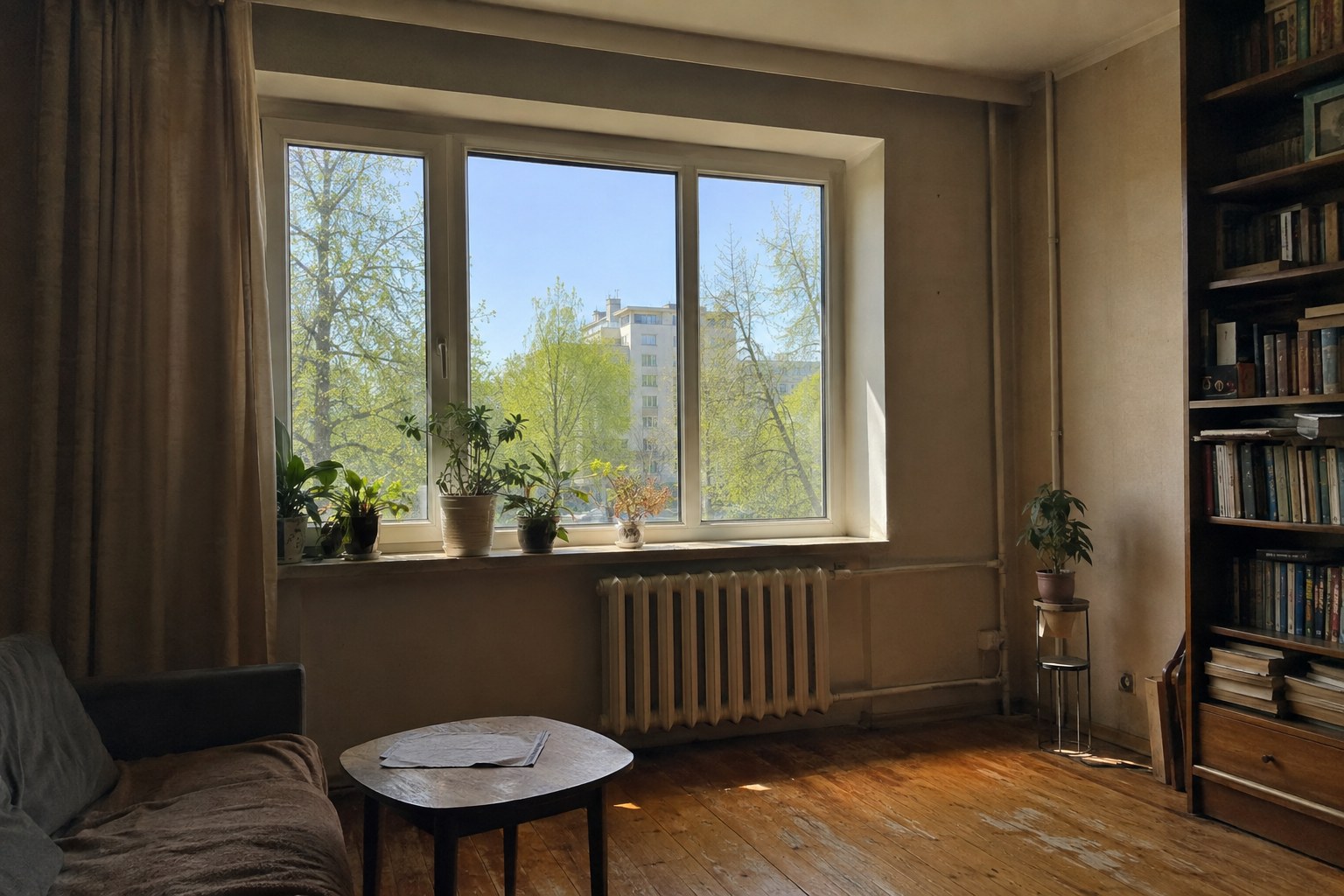
The benefit is proportional to how much sun actually lands on the glass.
The south side takes sun all day; the west side takes the heaviest afternoon load, when the building is already warm.
Sloping glass catches the summer sun almost head-on - the most common reason a loft room is unusable in the afternoon.
A large glazed area against a small volume of air means rapid heat build-up. This is where the difference is felt most.
Flats under a flat roof take heat through the windows and from above. Film removes one of the two sources.
If half the office is unusable because of glare, a light film sorts it out.
Every film has a specification called light transmission: how much visible light passes through the filmed glass. If it is high, the room stays bright and the film is barely noticeable. If it is low, the room becomes darker but the reduction in heat is greater.
The two figures are not rigidly linked. Modern films can reflect heat while holding back comparatively little visible light, but some compromise is unavoidable.
For living rooms we usually recommend the lighter films. Loft rooms, glazed terraces and offices with large glass walls suit a darker film, because there the heat is so pronounced that the loss of light is an acceptable price.
We bring samples to the measuring visit and hold them against the glass - far more useful than comparing numbers on paper. If temperature is your main concern, take a look at heat rejection film.
The choice comes down to the type of window, the access and the solar load.
This is the standard solution for most flats and offices. The film is shielded from rain, frost and knocks, so it lasts longer. Installation is carried out from inside the room, with no access platforms, which keeps costs down even on upper floors. Film fitted internally is also easier to look after and to replace.
Film fitted externally intercepts solar energy before it reaches the glazing unit. That helps when the glass is sensitive to thermal load or when working from inside is not possible. The drawback is that the film sits fully exposed to the weather and wears faster, so we use this option selectively.
Tell us which windows overheat and how many there are. We will prepare a quote with a price per square metre and recommend a suitable light transmission.
Here is what customers typically notice over the first few weeks.
The biggest change is in pace: the room stays comfortable for longer and the evening peak is lower. No film eliminates heat entirely.
Almost everyone notices this one. You can sit by the window, and there is no need to draw the curtains in the afternoon just to read your screen.
The unit generally runs less often and at less than full output, because less heat is arriving through the windows.
From outside the window takes on a light tone. On an apartment block that looks considerably tidier than a different set of curtains in every window.
The most common question before ordering is whether the film will leave the flat cold in winter. In Latvian conditions there is no noticeable difference: the sun sits low, clear days are few, and the heat gained through windows is small next to the heating system.
Summer is the opposite. In June and July south-west facing windows take sun for hours on end, and that is precisely when the film earns its keep. In spring and autumn the effect is noticeable on sunny days and imperceptible on overcast ones.
There are also UV protection films and thermal films, which work differently. You can compare every option on the prices page.
We work in every district of Riga and across Greater Riga - see our service area and our work in Riga.
These cases account for the bulk of our orders in the capital.
In Skanste and Teika the windows often run floor to ceiling, and the room heats up within a couple of hours. A light film keeps the view and takes the edge off the overheating.
In Pļavnieki and Imanta, top-floor flats suffer from the roof and the windows alike. Film removes the second source of load, and the difference is felt in the first hot week.
In Mārupe and Ādaži, sloping roof windows make a loft bedroom unusable in summer. See heat rejection film.
Where a glass wall brings both heat and unwanted attention from the street, we combine solar film with mirror film. Where the view out does not matter, frosted film works well.
Prices start from €25/m², and that covers both the film and the labour. Prices are excl. VAT and the minimum order is €75. The final figure depends on the number of panes, their size and access, so we prepare an exact quote after free on-site measuring.
That depends on the light transmission of the film. There are light films that are barely noticeable indoors and dark ones that visibly reduce daylight. If you want less heat but a bright room, we choose a film with higher light transmission.
In Latvia the solar heat gain through windows in winter is small, because the sun sits low and clear days are few. In practice most customers notice no difference in winter. In a heated room the film will not cause any perceptible drop in temperature.
In most cases we apply the film to the inside of the glass, where it is protected from the weather and lasts longer. We fit externally when working from indoors is not possible. We decide on the best option during the measuring visit.
The greatest effect comes on south- and west-facing windows, roof lights and loft windows, glazed terraces and balconies. These surfaces are in the sun the longest. North-facing windows rarely need film against heat.
For a typical flat the job takes anything from a few hours to a single day. The glass has to be cleaned thoroughly before application, and that accounts for a considerable share of the time. The room can be used straight away, though the adhesive takes a few weeks to cure fully.
Describe your situation in the form and we will prepare a quote with a recommended film.
We have received your enquiry and will prepare a quote. We will call you on the phone number you provided.
