Thermal films work on heat in both directions: in summer they help reduce solar heat gain, in winter they reflect part of the room's warmth back inside. On this page we are also candid about what film does not solve - draughts, gaps and worn-out windows. Riga and a 50 km radius, from €25/m².
The word “thermal film” is used in Latvia for two quite different things. Before choosing, it is worth working out which of the two jobs is yours.
Solar heat gain is what people notice most often. A room facing south or west becomes stifling in the afternoon, the air conditioning runs non-stop, and it is impossible to sit by the window.
This is where films that reflect and absorb part of the solar energy before it enters the room come into their own. Their effect is fairly obvious: the room no longer heats up so rapidly, and the afternoon peak temperature is lower. By exactly how much depends on the glazed area, the orientation of the window, the film chosen and the building as a whole, so it would not be honest to promise specific figures.
If this is your problem, the pages on solar control film and heat rejection film will also be useful - from €25/m².
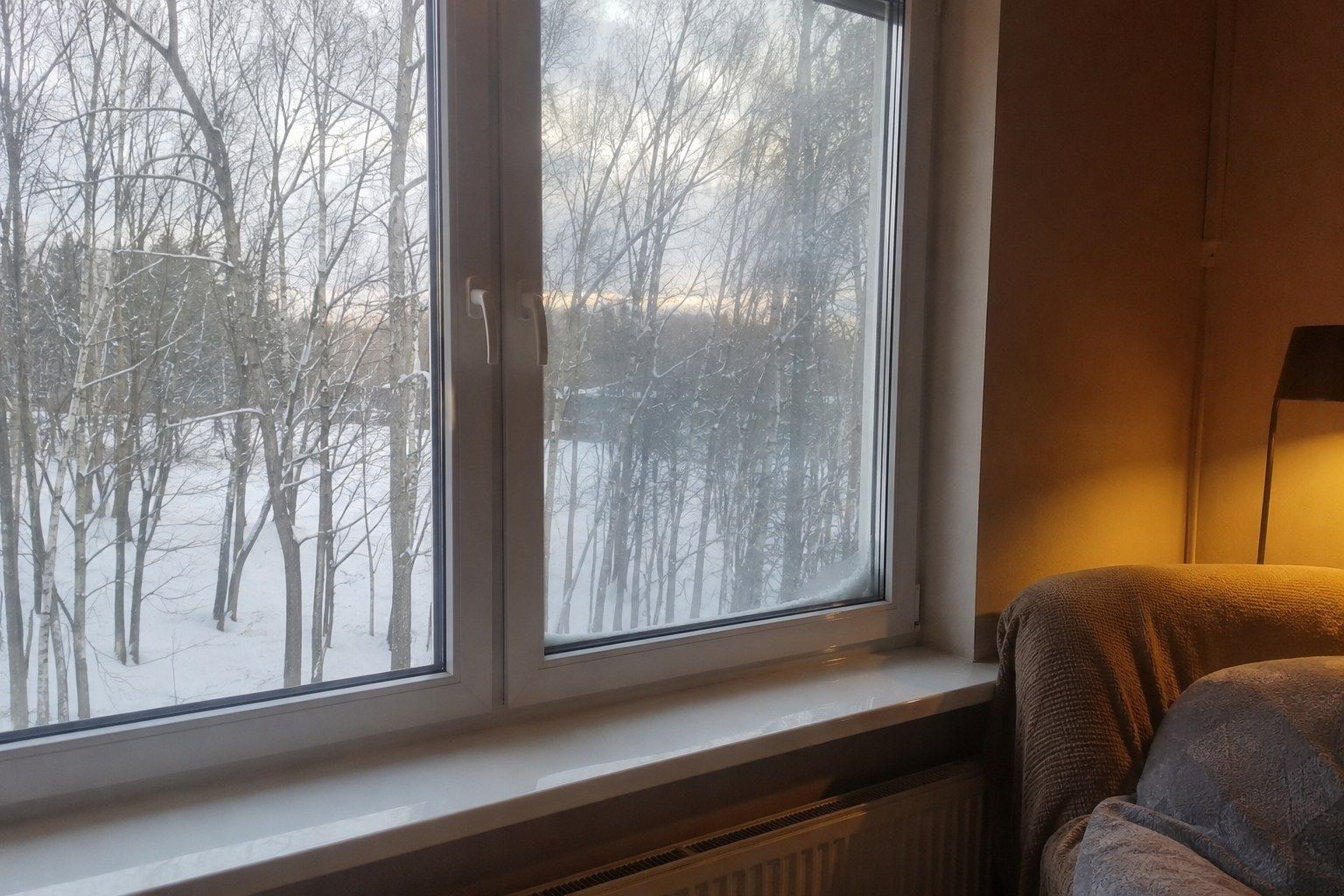
The second job is the opposite one. In winter a warm room radiates heat towards the cold glass, and part of it goes outside. Here low-emissivity films are used, which carry a special coating that reflects part of the room's radiant heat back inside.
This effect is subtler and less noticeable than the summer one. It is most often felt as less of a chill when sitting near the window, rather than as a change on the thermometer in the middle of the room.
This is the most important part of the page. Thermal film gets credited with things it does not do, and we would rather say so before the work than afterwards.
If cold air is coming in around the edge of the window, that is a sealing problem, not a glass problem. Film goes onto the glass and has no bearing whatever on what happens around the perimeter of the sash. Draughts are dealt with by replacing the seals, adjusting the ironmongery and filling the gaps.
If condensation has built up between the panes of a glazing unit, or there is visible misting, the seal has failed. Film does not repair that - the unit is already damaged and needs replacing. In that situation film would only hide the symptom rather than address the cause.
Film will not turn a single-glazed timber window with a dried-out frame into a modern glazing unit. It can slightly reduce radiant loss through the glass, but the underlying problem remains the quality of the frame and the construction. Here the more honest solution is often to overhaul or replace the window.
The winter effect of thermal film is best described in terms of comfort rather than numbers. A cold glass surface nearby feels unpleasant even when the air temperature in the room is perfectly normal - the human body radiates heat towards the coldest surface close to it.
Low-emissivity film can soften that sensation. It will not turn the window into a wall or replace the heating, but the space beside the window can become more usable.
Describe the room and when the problem is most noticeable. We will recommend a solution, get in touch and give you a quote.
Thermal film pays off most often where the windows themselves are technically sound but there is a great deal of glass. The typical example is a flat with large south-facing glazing, an office with a glass façade, or a glazed terrace. In these cases the problem is not the quality of the window but the area of glass - and glass is precisely what film works on.
The second case is leased premises or buildings where replacing the windows is not an option - historic buildings with rules about the appearance of the façade, for instance. Film is a reversible solution that leaves the window itself untouched.
The third is the situation where new windows are planned but not any time soon. Film can make the room usable in the meantime for an incomparably smaller sum.
If the room is draughty, the first step is to check the seals and the ironmongery. If there is condensation inside a glazing unit, the first step is to replace the unit. If the window is old and the frame is damaged, film will be money spent on a problem next door to the real one.
We say this during the measuring visit too. If we can see that film will not deliver what you are expecting in your situation, we would rather tell you straight away than fit it and leave you disappointed.
During the measuring visit we look at which way the windows face, the glazed area, the type of glass and the season in which the problem is felt most keenly. If the main complaint is summer heat, we choose a film with stronger solar heat reduction. If the main complaint is the cold by the window in winter, we look at low-emissivity options.
Light transmission has to be decided at the same time. Films range from light and almost imperceptible to distinctly darker. A darker film usually gives a stronger summer effect but leaves the room duller - and daylight is in short supply during a Latvian winter, which we take into account.
Thermal films start from €25/m². The price includes both the film and the labour, prices are excl. VAT and the minimum order is €75. If there is already old film on the glass, it has to be removed first, from €8/m². We write about the installation process itself on the window film installation page, and you will find an overview of the different types on the adhesive window film page.
All prices are on the prices page. We work throughout Riga and within a 50 km radius, including Jūrmala, Mārupe, Salaspils, Ķekava and Ogre.
The honest answer is that we cannot promise specific savings figures. Low-emissivity film helps reduce radiant heat loss through the glass, but what that means on your bill depends on the glazed area, how well the building is insulated, the type of heating, the condition of the windows and the winter itself. It is more realistic to expect an improvement in comfort near the window than a measurable change in heating costs.
No. A draught means air is moving through gaps between the sash and the frame, or between the frame and the wall, whereas film goes on the glass and has no effect on those gaps at all. Draughts are dealt with by replacing the seals, adjusting the ironmongery and filling the gaps - that is window maintenance work, not film work. If the room is draughty, we suggest sorting out the seals first.
Only partly, and high hopes are misplaced. Film can slightly reduce radiant heat loss through the glass itself, but it does nothing about the condition of the frame, the gaps and the seals, which in old windows are usually the main source of cold. If the window is worn out, the more honest solution is often to overhaul or replace it rather than to fit film.
Films intended for summer reflect and absorb part of the solar energy before it reaches the room, so the room does not heat up as quickly. Low-emissivity films intended for winter do the opposite: they carry a coating that reflects part of the room's radiant heat back inside. There are also films that work to some degree in both directions. We make the choice according to which season the problem is more noticeable for you.
That depends on the film chosen. There are light, virtually imperceptible films and distinctly darker ones. A darker film usually gives a more pronounced summer heat effect but leaves the room duller. Since daylight is scarce in a Latvian winter, we choose the light transmission deliberately and discuss it before the work, so the result comes as no surprise.
Thermal insulation films start from €25/m². The price includes both the film and the labour; there is nothing extra to pay for installation. Prices are excl. VAT and the minimum order is €75. If there is already old film on the glass that has to come off, that is a separate job from €8/m². We settle the exact figure after free on-site measuring.
Describe your situation - we will tell you honestly what film can and cannot give you, get in touch and provide a quote.
We have received your enquiry and will prepare a quote. We will call you on the phone number you provided.
