We strip old, faded and bubbling films from building windows, shopfronts and glass partitions. We then clean off the adhesive layer separately and restore the clarity of the glass. If you wish, we can fit new film straight afterwards. Riga and a 50 km radius, prices from €8/m².
No film lasts forever. When it starts to fail, the signs are fairly characteristic and easy to recognise.
If you notice several of these signs, the film has done its job. The good news is that it is only the film layer that has failed - the glass beneath it is usually in perfect condition.
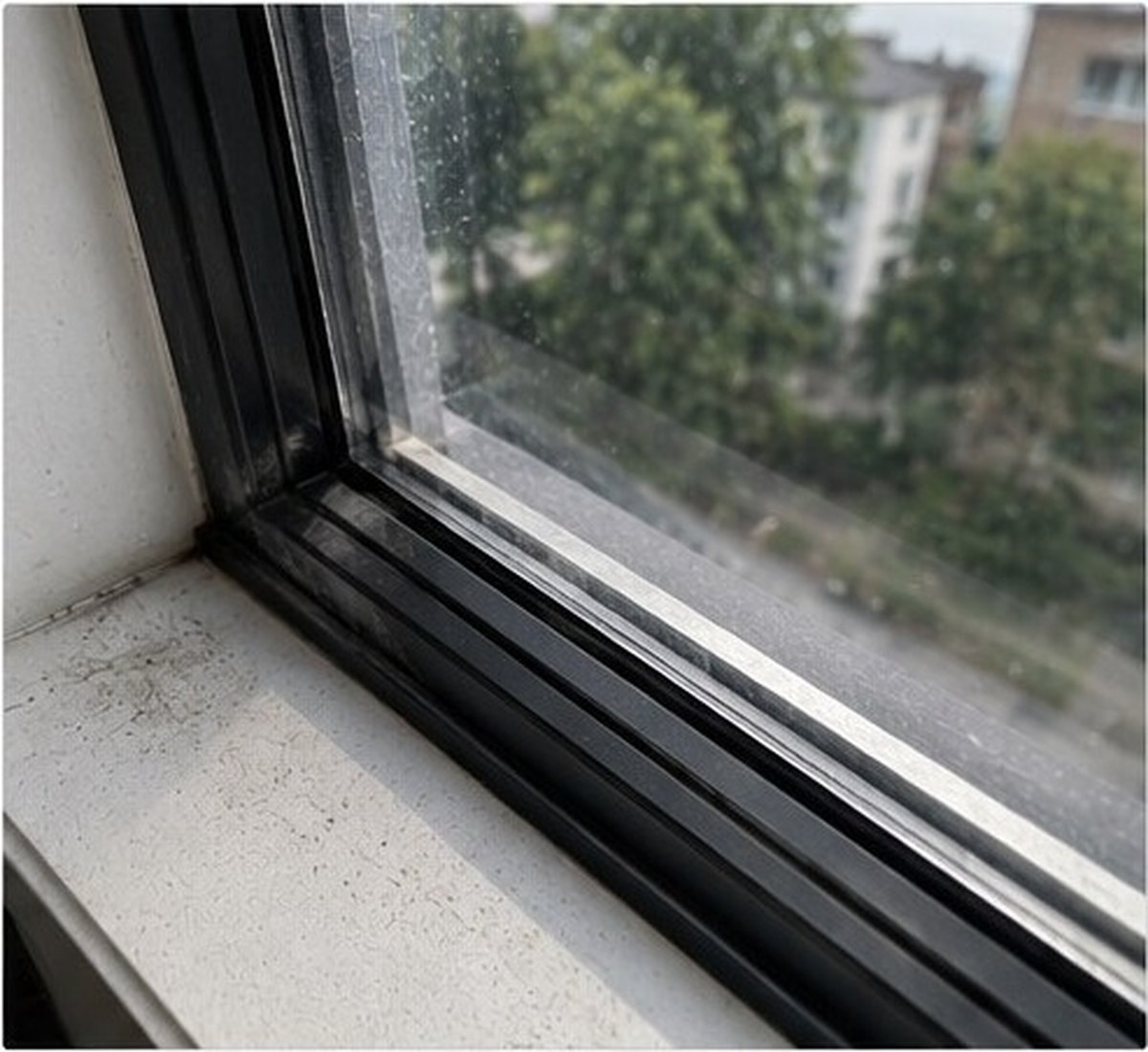
The main causes are ultraviolet radiation and temperature swings. Glass heats up in summer and cools in winter, and a material with an adhesive backing can only withstand that cycle for so long.
Films applied on the outside age faster, because they are directly exposed to rain, frost and sun. Films applied on the inside generally last considerably longer. How much sun a particular window gets and the humidity level of the room also make a difference.
Removal has two parts, and the second usually takes longer than the first.
We look at how old the film is, whether it comes off in whole pieces and what type of glass is underneath. On double-glazed units and toughened glass we proceed more carefully.
The work involves solution, so we cover the sill, the frame and the floor. It is wet work, and that has to be allowed for.
We lift the film off the glass, starting at an edge. If it is fairly new it comes off in large pieces. If it is old and sun-baked it tears into small fragments, and this stage has to be repeated many times over.
A layer of adhesive is left on the glass, which has to be soaked and removed separately. This is the slowest part of the job, particularly on old films.
We wash the glass and check it against the light for any remaining adhesive haze. After that the glass is ready either for use or for new film.
People often assume removal means pulling the film off and the job is done. In practice, pulling off the film is only the first half.
In old films the adhesive has been baked by the sun for years and no longer lifts away with the material. It stays on the glass as a sticky or hardened layer that has to be soaked and removed gradually. On a large pane that can take longer than all the rest of the work put together.
Tell us how many windows there are and how old the film is. We will prepare a quote and call you back.
Scratched glass. When the film refuses to come off, the hand reaches instinctively for a sharp scraper and more force. A metal blade on dry glass leaves scratches that are permanent - they cannot be polished out or hidden. It is not unusual for glass to look worse after a DIY removal than it did with the old film on.
Leftover adhesive haze. If the adhesive is only partly removed, an uneven, patchy layer stays on the glass, most obvious against the light and in the evening under artificial lighting. New film must not be applied over it - the result would be lumpy.
Damaged frames and seals. The aggressive solvents used to shift adhesive can damage the plastic window profile, the paintwork and the rubber seals. That damage cannot be undone either.
We handle sealed units more gently. Excessive heat or heavy pressure on a single point does a unit no good, and around the perimeter there is a seal that must not be damaged - that seal is what maintains the unit's integrity.
So on sealed units we use moderate heat, wetting and plastic tools rather than metal blades across the whole surface. Toughened and laminated glass also call for care, as they respond differently to incorrect handling than ordinary glass.
In most cases film is removed because something new is wanted in its place. That is the most convenient approach: once cleaned, the glass is already in exactly the condition needed for installation, so both jobs can be done in one go on a single visit.
We choose the new film to suit the job. If the old one was a solar film, solar control film or heat rejection film from €25/m² is often the answer. If privacy is what you need - frosted film. You will find an overview of all the types on our page about adhesive window films, and the fitting itself is covered on our page about window film installation.
When we strip film from a shopfront or an office partition, clients often order a new logo on glass at the same time.
Removal starts from €8/m². The exact figure is determined by the age and condition of the film and the type of glass: reasonably new film that comes off in whole pieces takes considerably less time than ten-year-old film that shatters into fragments with the adhesive baked on. Prices excl. VAT, minimum order €75.
Timing depends on the same factors. A handful of apartment windows is usually a one-day job; for large shopfronts or office glazing we plan separately.
All our prices are on the prices page. We work throughout Riga and a 50 km radius - including Jūrmala, Mārupe, Ķekava, Salaspils and Ogre.
Prices start from €8/m². The final figure is determined by the age and condition of the film and by the type of glass. Reasonably new film that comes off in whole pieces takes considerably less time than ten-year-old film that shatters into small fragments with the adhesive baked onto the glass. Prices excl. VAT, minimum order €75.
Because the job has two parts, and the second is the slower one. In old films the adhesive has been baked by the sun for years and no longer lifts away with the material - the film tears into small fragments while the adhesive stays on the glass as a separate layer that has to be soaked and removed gradually. On a large pane, removing the adhesive can take longer than all the rest of the work put together.
You can try, but the risk of damaging the glass is high. When the film refuses to come off, the hand reaches for a sharp scraper, and a metal blade on dry glass leaves permanent scratches. The other common problem is adhesive that has not been fully cleaned off, leaving a patchy haze that shows up against the light. Aggressive solvents can also damage the window profile and the rubber seals.
Yes, but we work more gently. A sealed unit has a perimeter seal that maintains its integrity, and that must not be damaged. Excessive heat or heavy pressure on a single point does a unit no good either. That is why we use moderate heat, wetting and plastic tools. Toughened and laminated glass also call for extra care.
Yes, and in most cases that is exactly what happens. Once the adhesive is off and the glass has been cleaned, it is already in precisely the condition needed for fitting new film, so we do both jobs in one go on a single visit. It also works out cheaper, since there is no second call-out.
In most cases, yes. It is the film layer that wears out, not the glass itself, so once the adhesive has been carefully removed and the glass cleaned, it regains its clarity. The exception is glass that was already scratched - for example by an earlier DIY removal attempt. Scratches in glass cannot be undone; we check for them and tell you before starting work.
Tell us how many windows there are and what state the film is in - we will prepare a quote and call you back.
We have received your enquiry and will prepare a quote. We will call you on the phone number you provided.
